Introduction
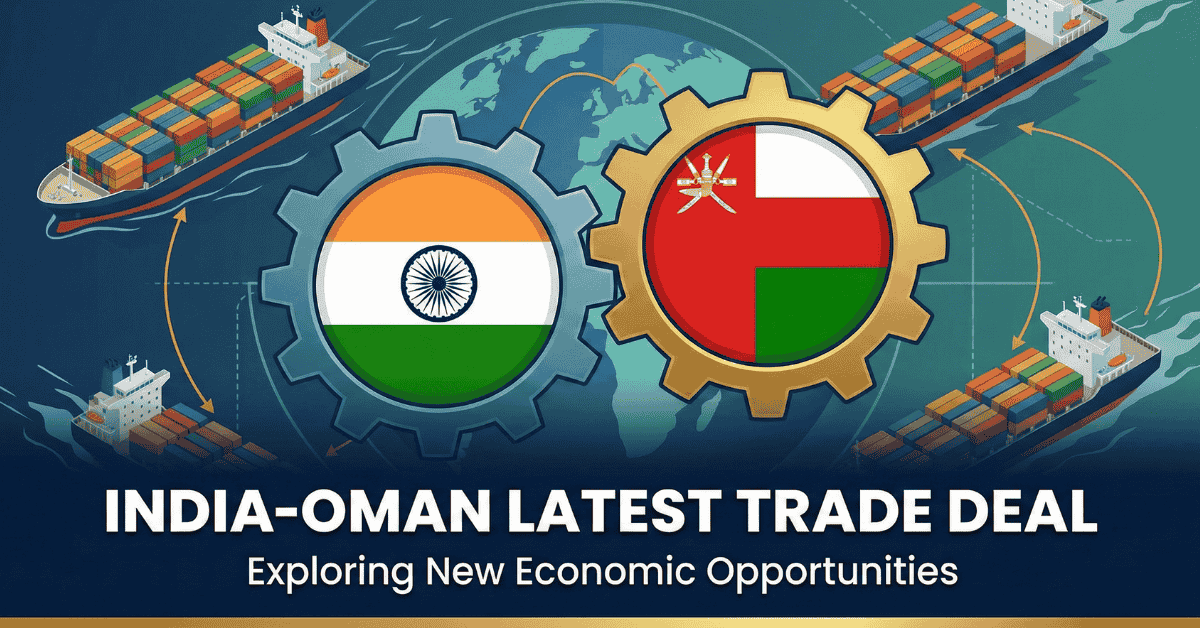
The economic relationship between India and Oman has steadily evolved over decades, built on historical trade ties, cultural exchange, and growing strategic cooperation. In 2025, this relationship has taken a significant step forward with a renewed Oman–India trade deal aimed at deepening economic integration, enhancing market access, and supporting long-term bilateral growth.
The Oman-India trade deal comes at a time when global supply chains are being restructured, regional trade partnerships are gaining importance, and businesses are seeking stable, reliable markets. For exporters, importers, investors, and policymakers, this agreement signals fresh momentum in Oman-India bilateral trade and reinforces India’s expanding engagement in the Middle East.
Overview of the Latest Oman-India Trade Deal
The latest India-Omani trade agreement focuses on expanding trade volumes, facilitating smoother cross-border business, and encouraging mutual investments. Rather than a single-sector arrangement, it reflects a comprehensive framework designed to support both traditional and emerging industries.
Key highlights of the agreement include:
- Enhanced cooperation in goods, services, and investment
- Streamlined customs and trade facilitation measures
- Stronger collaboration between ports, logistics hubs, and industrial zones
- Support mechanisms for MSMEs and startups
- Alignment with regional and global trade standards
From a strategic perspective, the agreement aims to increase bilateral trade volumes over the medium to long term while positioning both countries as dependable partners within the broader India-Middle East trade landscape.
Key Sectors Covered Under the Agreement
Agriculture & Food Products
Agriculture remains a cornerstone of Oman-India economic cooperation. The agreement supports trade in food products such as spices, grains, processed foods, and value-added agricultural goods. For India, this strengthens access to a stable Gulf market, while Oman benefits from diversified and reliable food supplies.
Energy & Petrochemicals
Energy cooperation continues to play a vital role in the relationship. Oman’s position as an energy producer and India’s great and growing demand create natural synergies. The trade deal encourages collaboration across oil, gas, petrochemicals, and downstream industries, with an emphasis on long-term supply security.
Manufacturing & Engineering Goods
Engineering products, industrial machinery, construction materials, and manufactured components are gaining importance in the Oman-India bilateral trade. The agreement supports smoother movement of industrial goods and encourages joint ventures in manufacturing and infrastructure development.
Logistics, Ports, and Infrastructure
Ports and logistics form a strategic pillar of the deal. Oman’s ports serve as key gateways to the Gulf and East Africa, while India offers scale, manufacturing depth, and access to South Asia. Cooperation in port development, warehousing, and multimodal logistics enhances efficiency across the trade corridor.
MSMEs and Startups
A notable feature of the agreement is its focus on MSMEs and startups. By improving access to finance, information, and institutional support, the deal aims to integrate smaller businesses into international trade and investment flows.
Benefits for Indian Exporters
The Oman-India trade deal creates several advantages for Indian exporters across sectors.
Market Access Advantages
- Improved entry into the Omani market
- Better visibility for Indian products in the Gulf region
- Opportunities to use Oman as a regional distribution hub
Reduced Trade Barriers
Efforts to simplify customs procedures, documentation, and regulatory alignment help reduce transaction costs and delays, improving overall trade efficiency.
Opportunities for SMEs and Agro-Exports
Indian SMEs, particularly in agriculture and food processing, stand to benefit from consistent demand, proximity to markets, and growing consumption in Oman and neighbouring regions.
Benefits for Omani Businesses
For Omani companies, the agreement opens new avenues in one of the world’s fastest-growing major economies.
Investment Opportunities in India
India’s large domestic market, manufacturing initiatives, and infrastructure expansion offer long-term investment potential for Omani firms in sectors such as energy, logistics, and industrial development.
Supply Chain Diversification
The agreement supports supply chain resilience by enabling Omani businesses to source from a diversified and scalable Indian supplier base.
Strategic Access to South Asian Markets
Through India, Omani companies gain strategic access to South Asia, strengthening Oman’s role as a regional trade and logistics hub.
Impact on Bilateral Trade & Regional Economy
Strengthening India–GCC Relations
The trade deal reinforces India’s engagement with the Gulf region and aligns with broader economic cooperation involving the Gulf Cooperation Council. It contributes to regional stability and shared economic growth.
Role in the Middle East–South Asia Trade Corridor
By improving connectivity, logistics efficiency, and regulatory cooperation, the agreement strengthens the Middle East–South Asia trade corridor, benefiting not only India and Oman but also surrounding markets.
Opportunities for Exporters & Importers
High-Demand Products
- Food and agricultural products
- Engineering and construction materials
- Chemicals and petrochemicals
- Consumer goods and industrial inputs
Logistics and Warehousing Growth
Rising trade volumes are expected to increase demand for warehousing, cold storage, freight forwarding, and port services, creating opportunities for logistics providers.
Long-Term Partnership Potential
Beyond transactional trade, the agreement encourages long-term partnerships, joint ventures, and technology collaboration between Indian and Omani businesses.
Challenges & Considerations
Compliance, Regulations, and Standards
Businesses must remain attentive to quality standards, certification requirements, and regulatory frameworks in both markets to ensure smooth operations.
Logistics and Documentation Awareness
While facilitation measures are improving, effective trade still requires strong documentation practices, reliable logistics partners, and awareness of local procedures.
Future Outlook
Long-Term Economic Cooperation
The India-Oman trade agreement is expected to deepen economic cooperation beyond trade, encompassing investment, technology exchange, and skills development.
Expected Growth Trends and Trade Expansion
With supportive policies and growing private-sector engagement, Oman-India bilateral trade is likely to see steady growth, supported by regional integration and global demand shifts.
Conclusion
The latest Oman–India trade deal represents a strategic milestone in bilateral economic relations. By addressing market access, logistics efficiency, and sectoral cooperation, it lays a strong foundation for sustainable growth and deeper integration.
For exporters, importers, investors, and trade professionals, the message is clear: early engagement and strategic planning can unlock meaningful opportunities. As India and Oman continue to strengthen their partnership, businesses that act now will be better positioned to benefit from the evolving landscape of India-Middle East trade.